HSS in Exposed Architecture: Why the Section You Pick Changes How the Weld Looks
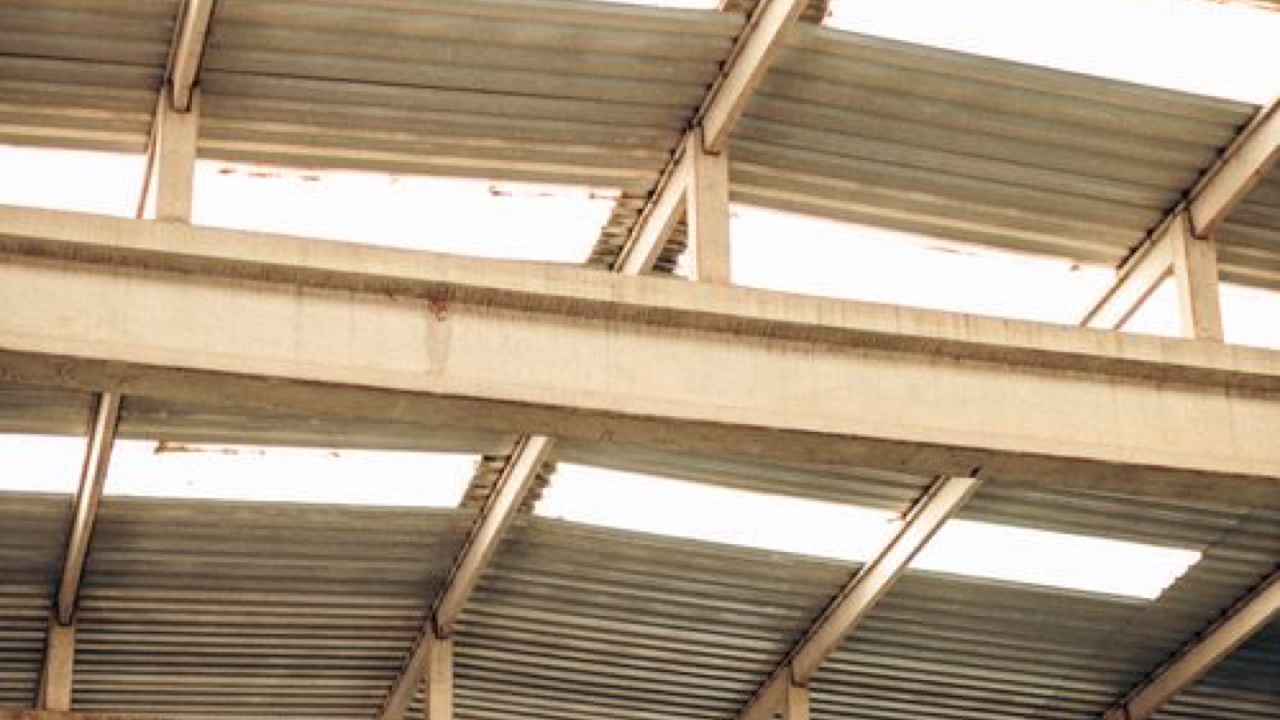
When structural steel stays hidden behind drywall or above a suspended ceiling, the weld quality question is purely structural. The inspector checks it, the engineer signs off, and nobody else ever sees it. When the steel is exposed — and in contemporary architecture, exposed steel is often the point — the weld becomes part of the visual language of the building. A lumpy, inconsistent weld on a round HSS column in a public atrium is not a structural problem. It’s a permanent aesthetic failure that everyone who walks through that space will see for the life of the building.
The choice of hollow section profile — round, square, or rectangular — has a direct bearing on how difficult that weld is to execute well, and understanding that connection is something architects and engineers don’t always talk about early enough in a project.
Why Round HSS Is the Hardest to Weld Cleanly
Circular hollow sections are the most visually refined option for exposed structural members. A round column reads as elegant and minimal; a square column reads as more industrial. Architecturally, round wins on aesthetics in most contexts. Structurally, a circular section has equal stiffness in all directions, which is an efficiency advantage for axially loaded columns.
But round HSS creates the most demanding welding challenge of any HSS profile. The reason is simple geometry: to weld a branch member to a chord in a truss, or a brace to a column, the end of the branch has to be cut to match the curved surface of the chord. This cope cut — called a saddle cut — follows a compound curve that varies continuously around the perimeter of the branch. The gap between the two pieces is zero at the sides and maximum at the crown and heel. Maintaining a consistent, even weld across that varying geometry requires skilled welders and, for the best results, a fit-up so precise that the gap stays within tight tolerances everywhere.
When the fit-up is right and the welder is skilled, the finished weld on a round-to-round connection can be nearly invisible after grinding and painting. When the fit-up is off by a few millimeters, or the welder compensates for gap variation by changing their travel speed or wire feed unevenly, the finished weld shows ripple, varying width, and inconsistent cap profile. On a structural member nobody sees, that’s a quality note in the inspection report. On an exposed column in a museum lobby, it’s exactly what visitors look at.
Square and Rectangular HSS: Easier Joints, Different Visual Result
Square HSS simplifies the welding geometry considerably. When a branch member meets a square chord at 90 degrees, the end of the branch is a simple rectangular cut, and the weld runs around four straight-sided faces. A competent welder with correct parameters can produce consistent, uniform welds on these joints without the compound geometry challenge of round-to-round connections.
The corner detail on square and rectangular HSS deserves separate attention in exposed applications. The corner zones of cold-formed square and rectangular HSS have a radius — the outside corner isn’t sharp, it’s a curve governed by the forming radius. The HSS steel section guide for ASTM A500 cold-formed product specifies a corner radius in the range of 2t to 3t (where t is wall thickness), which means that on a 6×6×1/2 section, the outside corner has a radius of roughly 1 to 1.5 inches. That rounded corner is part of the visual character of the section, and at welded connections it creates a small gap between the weld and the corner that needs to be handled carefully to avoid a notch in the finished appearance.
For architecturally exposed connections, some fabricators fill the corner gap with weld material and grind flush, producing a continuous surface at the connection. Others design the connection to run the weld through the corner zone in a way that minimizes the visual interruption. Which approach is better depends on the specific connection geometry and the finish treatment — painted surfaces hide more than bare steel or clear-coated weathering steel.
The Pre-Construction Conversation That Needs to Happen
The mistake I see repeatedly on exposed HSS projects is the architect and structural engineer finalizing the section selections and connection geometries independently, without early input from the steel fabricator. By the time the fabrication drawings are being reviewed, the section choices are set, the connection geometries are locked in, and the question of weld appearance has never been discussed in terms of what’s achievable with the selected profile and connection type.
The conversation that should happen early — ideally during design development, before structural sections are finalized — covers three things. First, what finish quality level is the architect expecting? There’s a difference between standard structural welding, enhanced quality welding where appearance matters, and architecturally exposed structural steel (AESS) with specific surface preparation and weld quality requirements. Second, how does the chosen profile affect achievability of that quality level? Round-to-round connections at acute angles are much more demanding than perpendicular square-to-square joints; if the architectural intent requires round HSS with complex connection geometry, the budget and schedule need to reflect that difficulty. Third, are there profile alternatives that achieve the same visual intent with better fabrication economics?
Sometimes the answer is that round HSS is the right choice and the project budget accommodates the additional welding care it requires. Sometimes switching from round to square changes the visual reading less than expected and simplifies fabrication considerably. Sometimes a rectangular HSS rotated to present its narrow face mimics the appearance of a round column well enough that the architect agrees to the substitution after seeing a sample.
Grinding and Finishing: Where the Visual Quality Is Actually Made
The as-welded condition on most HSS connections, even with high-quality welding, won’t meet architectural expectations without post-weld grinding and blending. The weld cap sits above the parent metal surface, the weld toes create geometric discontinuities, and spatter from the welding process leaves marks on the surrounding steel. On structurally functional steel that will be painted and hidden, none of this matters. On exposed steel that will be seen up close, all of it matters.
The grinding and blending process that takes a structurally acceptable weld to an architecturally acceptable surface is labor-intensive and requires skill. The sequence — rough grinding to remove cap height, intermediate grinding to blend the transition, finish grinding or sanding to achieve the specified surface roughness — typically takes more time than the welding itself on complex round HSS connections. That time needs to be in the fabricator’s estimate, which means it needs to be in the scope of work, which means it needs to be discussed before the bid is finalized.
Projects where grinding and finishing aren’t specified or priced in advance tend to produce exposed steel that the architect is unhappy with, followed by contractor disputes about whether additional work was included in the original scope. Getting the finish requirement defined in the specification, agreed to in the bid, and confirmed in a pre-construction mockup saves that conversation for later.